
Most businesses do not think of transport as a cost centre. Staff expense taxis and ride-hailing on the go, managers approve them without much scrutiny, and nobody looks again until the quarterly review shows the total.
Surge pricing, cancellation fees and inconsistent routing add up quickly for a team of ten making regular client visits across Manchester, and the time lost costs more than any of them. A cancelled ride at 7:45am is a missed meeting. A late taxi is a client left waiting.
Reliability you can plan around
The trouble with taxis and ride-hailing is variance. The vehicle might arrive in three minutes, in twenty, or not at all, and you cannot plan a day of meetings around that.
A chauffeur service works from confirmed bookings. We allocate the chauffeur in advance and plan the route and the fallbacks before the day. If there is congestion on the M60, the chauffeur already knows the alternative. A business running tight schedules between meetings, site visits and airport transfers needs that kind of predictability.
The difference is most visible when something goes wrong. A delayed flight, a session that overruns or a venue change is absorbed by an operator holding your booking. On an app, each of those becomes a fresh negotiation with a driver who has no context.
Arriving in front of clients
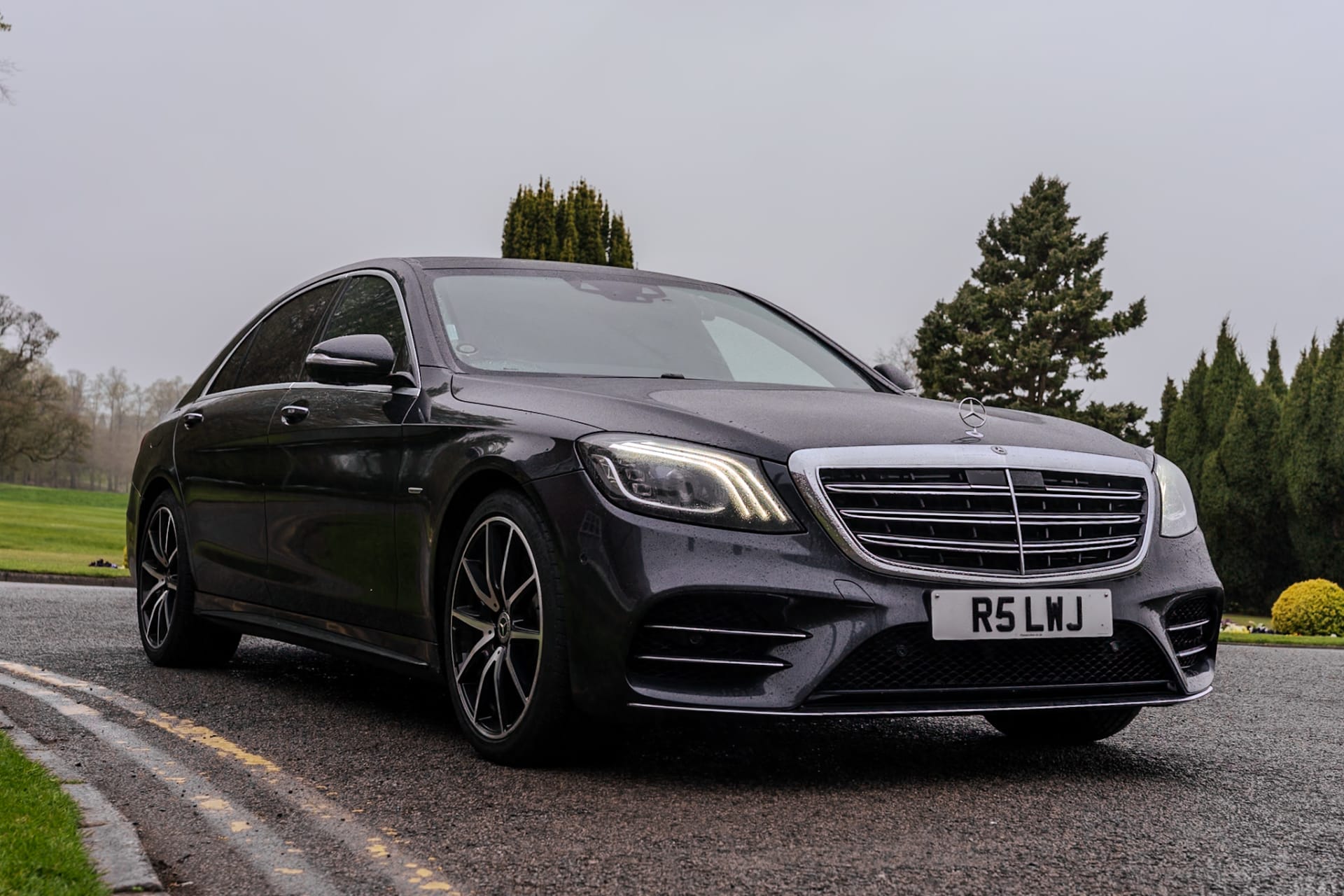
When a client steps out of a clean, chauffeur-driven vehicle, the meeting starts differently.
A corporate chauffeur signals that a business takes detail seriously, and tells the client they matter. For client-facing roles the comparison is stark: a considered arrival against a vehicle that smells of air freshener with a cracked phone mount on the windscreen. For senior travel and client entertainment, the vehicle is part of the hospitality rather than incidental to it.
Confidentiality in the car
Senior executives discuss board strategy, personnel changes and financial results in transit. In a shared vehicle or a minicab with a dashcam, none of that is private.
A corporate chauffeur works under a professional duty of discretion. Our chauffeurs are vetted and briefed, and they keep what they hear in the car to themselves. We do not sell or trade passenger data, and there are no driver ratings that expose travel patterns to anyone who looks. Legal, financial and consulting firms tend to insist on this.
The administration disappears
Moving to an account removes the expense admin straight away: nobody has to collect individual receipts, chase reimbursements or reconcile ride-hailing statements across employee accounts.
Approved accounts get one VAT invoice a month. Your staff have nothing to claim back.
You also get a named contact at R5, so a change is one call rather than a form.
The cost comparison
On paper a taxi looks cheaper, and for a single short journey it often is. The comparison changes once everything is counted.
Factor in surge pricing at the times business travel actually happens, which is early mornings and evening returns, along with tips, waiting charges, cancellation fees and the administrative cost of processing individual expenses. The gap narrows considerably. Then add the costs that resist quantification: an associate arriving flustered to a client pitch, a visiting director waiting in the rain, a confidential call overheard.
Many businesses default to a company vehicle scheme instead: they pay for insurance, maintenance, depreciation and fuel, and rarely count the admin of running a fleet on top. A chauffeur account carries none of that fixed cost. Our business case for executive travel covers where chauffeured travel pays and where it doesn't.
On a fixed-rate account you know each fare before the journey, and while the price per journey is usually higher, the cost to the business is frequently lower.
Scaling without commitment
Unlike a vehicle scheme requiring long-term leases, a chauffeur account scales with what you actually need. Occasional airport transfers, regular corporate travel across the North West, or concentrated activity around an event period are all accommodated without fixed overhead.
Businesses with seasonal patterns benefit most from this. Additional capacity supports a busy quarter without carrying unused vehicles through a quiet one.
How the switch works
Moving to a corporate account is straightforward. We start with a conversation to understand your travel patterns, preferred vehicles and billing requirements, and set the account up from there.
Your team can book by phone or email, or request a quote online. We schedule regular journeys in advance and fit in short-notice requests whenever we have a car free. There are no minimum commitments and no long-term contracts.
Frequently asked questions
Is a corporate chauffeur more expensive than a taxi?
The price per journey is usually higher. The total cost to the business is often lower once surge pricing, cancellation fees, waiting charges and the administrative cost of processing individual expense claims are counted, along with the cost of a missed or delayed meeting.
What is the difference between a chauffeur and a private hire taxi?
A chauffeur booking is confirmed in advance with a named, vetted chauffeur, a planned route, a fixed price and a duty of discretion. A taxi or ride-hailing booking is allocated on demand, priced dynamically and carries no commitment as to vehicle standard or driver.
How does monthly invoicing work on a corporate account?
Approved accounts get one VAT invoice a month on thirty-day terms.
Are there minimum spend commitments or contracts?
No. There are no minimum commitments and no long-term contracts on a corporate account.
Can we book for clients and visitors as well as our own staff?
Yes. Accounts are routinely used to arrange travel for visiting clients, candidates and guests, with billing consolidated onto the company statement rather than handled by the passenger.
Ready to move your business travel onto a managed account?
Get a quote